
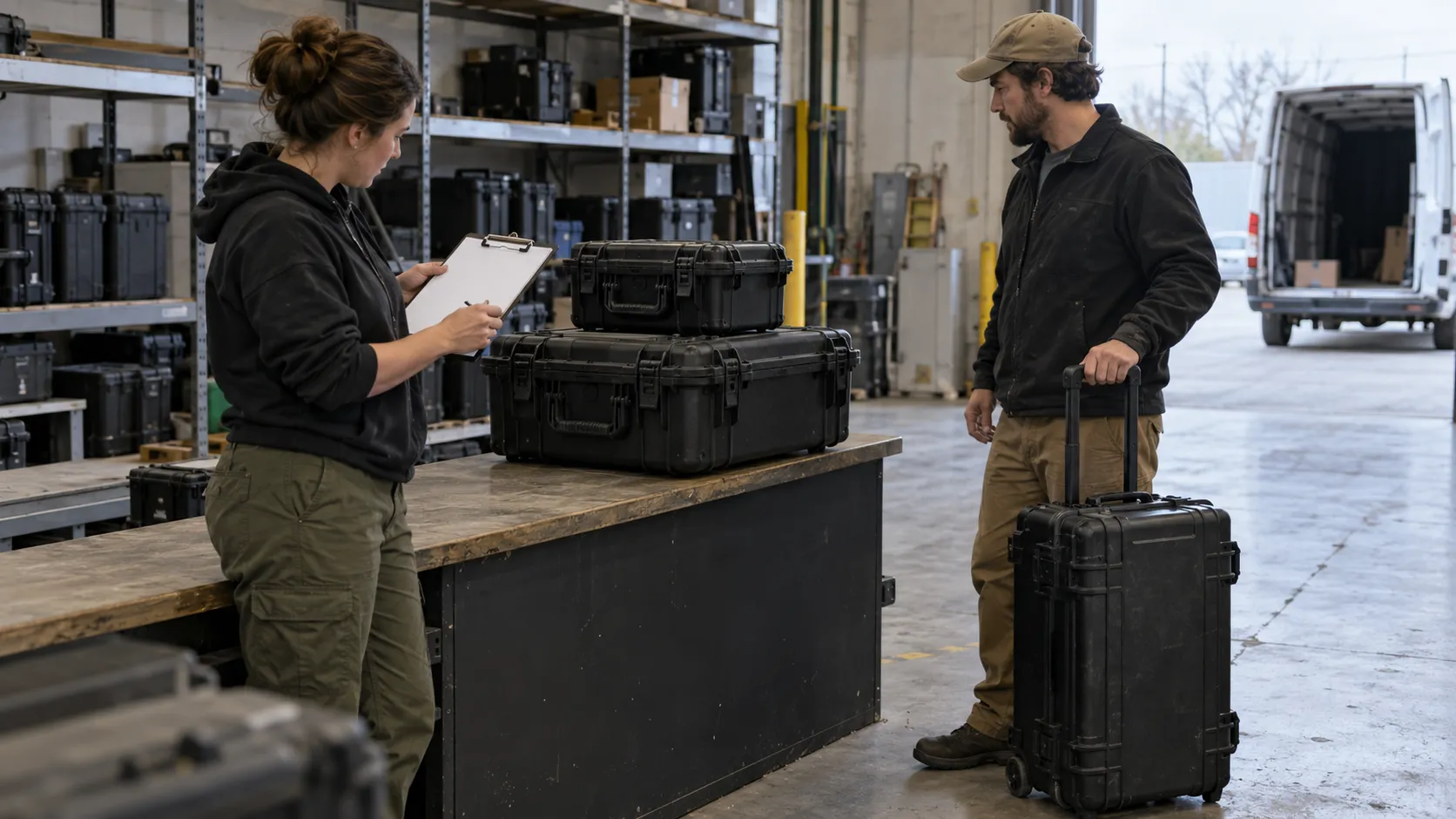
A visiting crew can have a confirmed equipment collection and still have no workable plan for the first setup. The cases are ready to leave, but the camera assistant is arriving on another flight, the production laptop is with the producer, and nobody has arranged a place to assemble the package before the location opens.
The weak point is the space between those commitments. A pickup appointment, a technical prep and a location-ready package are different milestones. Giving each one an owner and a place in the schedule makes a rental request much more useful than adding another contingency item to the Gear List.
Give collection and prep separate jobs
At collection, the immediate task is to reconcile the handoff: what has been supplied, what belongs together, and what needs to be raised before the cases leave. Prep asks a different question: does the combination this production will actually use perform the required job?
That distinction matters when some components travel with the crew. A rented reader may be present and accounted for; the production still needs to confirm its own computer can use it. A support package may be complete; the operator still needs to establish the working build with the accessories being brought from home.
Our current rental process lists standard pickups by confirmed appointment Monday through Friday, 2:00–4:00 PM, normally on the business day before production. Treat that as the collection arrangement. Discuss any additional prep needs separately rather than assuming the appointment includes an unrestricted work area or extra technical time.
Bring the parts that complete the test
Before travelling, identify which checks depend on something outside the rental package. The useful list is often shorter than a full equipment inventory, but more specific than “the crew has the rest.”
A producer might ask the department leads to name:
- The owned component needed to check each rented connection or accessory.
- The person carrying that component and when it becomes available.
- The result that demonstrates the first planned setup is ready.
For camera, that result could include a short recording made in the intended mode and opened through the production’s actual media workflow. For a client viewing station, it could be the agreed picture reaching the intended screen. The monitoring signal plan deserves its own preparation; finding a screen in a case does not settle what the client will see.
These are proposed checks, not a claim that an unspecified combination is compatible. Let the actual equipment, crew responsibilities and deliverables determine the test.
Put prep somewhere it can happen
“After pickup” is not a location. If the crew plans to assemble equipment in accommodation, a production office or the shooting location, confirm that the space is available and suitable before making it a dependency.
Ask who can enter, where cases can be opened without obstructing other work, what power is available, and where the package can remain secure. If prep must happen at the rental facility, discuss the arrangement with the Rental Team in advance. Do not build a schedule around access that has not been agreed.
The same discipline applies to the destination. Ask the location contact about the actual equipment entrance, unloading arrangements, route to the room and permitted access time. A street address is not a complete unloading plan. Avoid assuming a particular hotel or venue follows another property’s procedure.
Allow for the physical reset between prep and transport. A build that works on a bench may need to be partly dismantled to travel securely. Decide what stays assembled, what returns to its case, and what must be checked again after the move.
Protect the first required setup
Work backwards from the first image the production needs, rather than from a generic ambition to have every possible configuration ready.
For a hypothetical interview, the priority might be the principal camera, the agreed sound path and a viewing arrangement for the director. A later moving shot could require another build. That does not make its prep unimportant; it gives the crew a deliberate order for the checks and a clear point at which the first setup is ready.
Name a practical fallback for any dependency that could prevent that first setup. It might involve changing the shot order or agreeing a simpler viewing arrangement with the appropriate department lead. Confirm the consequence for the production instead of quietly substituting something that changes the required result.
If the only plan depends on a person or component arriving at the last moment, expose that dependency early. Another case of equipment cannot automatically replace missing time, access or a decision-maker.
Write one handoff note people can use
The collector and the prep lead may be different people. Give them the same short note, with confirmed arrangements distinguished from open questions.
For example: “The authorized collector reconciles the cases at the agreed appointment. The camera assistant brings the owned accessories to the confirmed prep space. The department checks the first interview configuration and a sample recording before repacking for transport. The producer confirms location access and receives any unresolved issue before the crew leaves for set.” This is a hypothetical allocation of responsibility, not a confirmed appointment or service package.
Use the complete rental guide for the broader rental requirements. Then add the production-specific details to the request: what you are bringing, who will collect, where the package will be checked and when it must be ready for its first job. That gives the conversation a workable schedule as well as an equipment list.
The image is an AI-generated illustration of a fictional production scenario.