
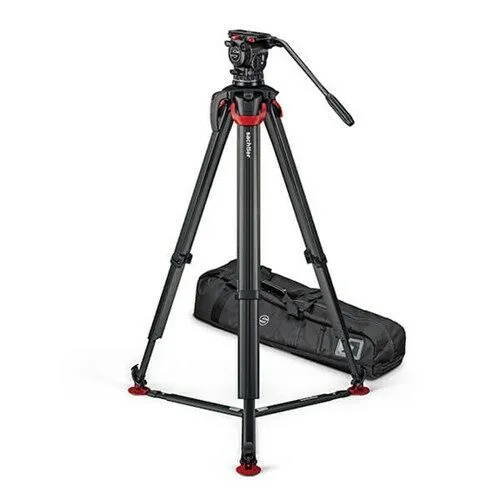
The camera body can be the lightest version of the package you are about to put on a tripod. By the time the lens, power, baseplate and viewing accessories are in place, both the weight and its distribution may have changed. A load rating is useful information, but comparing it with the body’s published weight leaves much of the working setup out of the decision.
For a rental request, the better starting point is the camera as it will be operated, together with the movement the shot requires. That gives the rental team a build to evaluate. It also gives the operator a reason to choose one support package over another beyond a familiar model name.
Describe the build that will reach the head
Include everything the head will carry, whether it comes from the rental house or the crew. A lens, adapter, rods, lens support, battery, monitor and receiver can each change the package. Equipment carried elsewhere should be described separately so it is clear what belongs in the supported load.
A parts list is more useful when it explains placement. A rear battery and a front-heavy lens affect the arrangement differently from accessories close to the body. An image of the intended build can help communicate those relationships, provided the components and any planned changes are identified. A photograph of last year’s camera configuration is a starting reference rather than confirmation of this year’s package.
Consider a hypothetical interview package that changes to a longer lens later in the day. The body remains the same, but the support decision now needs to account for another lens and its required accessories. If the request names only the body, that second configuration is invisible to the person evaluating the tripod.
Send both working builds early. Where the final lens is undecided, name the options instead of treating the lightest configuration as representative. Stay within the applicable equipment limits and confirm the proposed combination with the rental team.
Separate balance from movement resistance
Counterbalance helps a fluid head oppose the tendency of a tilted payload to fall away. Drag controls resistance during movement. They address different parts of the operator’s experience, and neither removes the need to evaluate the complete load.
Sachtler’s aktiv10 user guide treats payload positioning, counterbalance and drag as separate adjustments. It also calls for the camera and accessories to be in their operating positions before balancing; later changes can disturb that balance. Follow the supplied equipment’s instructions and have a qualified operator perform setup.
The useful rental question is whether the intended build can be balanced and operated for the required shot. A package that changes substantially between setups deserves a discussion about those changes. More drag is not a planning substitute for resolving an unsuitable load or an unbalanced configuration.
The manufacturer’s aktiv10 flowtech100 GS specifications also state a centre-of-gravity condition alongside the payload range. That qualifier matters: a headline weight figure should be read with the conditions under which it is specified. Compare documentation for the actual head and configuration rather than assuming every similarly named tripod package has identical limits.
Give the shot and the space equal attention
A locked interview, a slow tilt following a standing subject and a repeated pan between marks ask different things of an operator. Describe the move, the intended lens and the start and end frames. “Smooth movement” is a preference; the actual action gives the equipment discussion something to work with.
Height and footprint belong in that discussion too. Identify the camera positions that need to work, the surface beneath the legs and the space available to the operator. A tall position on a level stage and a low position in a furnished interior are different planning problems. Confirm the supplied legs, spreader, feet and height range rather than inferring them from a head’s name.
Our lens-package article looks at usable camera positions in a room. Support adds another constraint to the same location: a composition has to leave room for the actual setup and its operator. Resolve that space during planning instead of discovering at prep that the proposed position only works for the camera body on its own.
Leave a meaningful check for the assembled package. Rehearse the intended movement at the planned height with the working configuration. A quick static frame can confirm composition while leaving the harder start, stop or tilt unresolved. This is a check of the proposed shot, not evidence that an unfamiliar location will behave identically on the day.
Send a support brief, not just a tripod name
A concise brief can include the complete camera build, alternate lens or accessory configurations, required heights, intended movements and location constraints. Identify crew-supplied parts, especially camera plates and mounting components, so their interfaces can be confirmed with the supplied package.
The Sachtler aktiv10 flowtech 100 Tripod is listed in the In Color Rentals catalog and is a relevant starting point for that conversation. Confirm the exact supplied configuration and its suitability for your build with the Rental Team. A catalog listing does not establish availability for your dates or compatibility with an unspecified camera package.
A useful request might say: “One interview position followed by a standing pickup; two proposed lens configurations; working-build details attached; please confirm head, legs, plate and operating heights.” It leaves unresolved choices visible and gives prep a clear purpose. The strongest support choice is the one that meets the equipment limits and lets the crew execute the intended shot with the complete camera they will actually use.