
A room that sounds quiet during a quick walkthrough can be a different location when the interview begins. The corridor fills, another meeting starts next door, or equipment that was idle during the scout is now running. For a visiting crew, the useful commitment is more specific than access to a room: it is a workable recording window under understood conditions.
That matters when the subject has limited time and the room has been chosen partly for its background. Before the rental package is fixed, establish what the crew is hearing, what might change and who can answer for the space. A microphone choice can help shape a recording, but it cannot secure a quiet period on the production’s behalf.
Listen from the proposed interview position
Start where the subject will sit, rather than assessing the room from its entrance. Have someone speak at a normal interview level while the sound lead listens from the intended working arrangement. Notice the character of the voice as well as interruptions around it.
During a technical check, use the proposed microphone and recording path, then listen to the recording. The camera framing, microphone position and room all need to be considered together. A position that gives the art department a strong background may leave the microphone farther away or point the setup towards an unwanted sound source.
Shure’s Audio Systems Guide for Video and Film Production explains how microphone directionality, distance and hard room surfaces affect unwanted sound and reverberation. That supports a practical scout question: can the production place the speaker and microphone sensibly within the intended frame, or is the chosen composition creating the audio problem?
A phone walkthrough is useful context for a remote crew. Treat it as context, not a substitute for hearing the intended recording arrangement. Ask for a chance to check the setup before the subject’s limited interview time becomes the test period.
Separate reflections from sound entering the room
A voice sounding hollow in a hard room and speech arriving through a neighbouring wall are different problems. Describe which one is preventing an acceptable recording before deciding what to add to the rental list.
Sound absorption addresses reflected sound within a space. Blocking or isolating sound entering or leaving it is a different job. Audimute makes that distinction in its absorption-sheet FAQ: its absorption sheets are intended to reduce reverberation, rather than serve as a sound-isolation solution. This explains the distinction; it does not establish identical performance for another manufacturer’s material.
Our catalog includes VB-77G sound blankets, a relevant treatment option to discuss with the Rental Team and sound department. The word “soundproof” in a listing is not a promise that hanging a blanket will isolate a room from adjoining activity. Confirm the actual material, proposed support and intended use, and evaluate the result in the location. No particular reduction in noise or room reflections is guaranteed here.
Keep any temporary treatment within arrangements agreed with the location. Do not build the plan around covering a doorway, blocking ventilation or attaching material to a surface without the appropriate approval. The useful question is whether the proposed treatment and its footprint are workable for this production.
Ask what happens during the recording window
For a hotel, meeting room or convention-space interview, ask the location contact about the period when recording must happen. Avoid assuming that one Las Vegas property operates like another, or that an empty room means the surrounding area will remain quiet.
Useful questions include what is scheduled in adjacent spaces, whether a corridor is a shared circulation route, when servicing or deliveries may occur, and whether any audible systems run on a cycle. Ask what can actually be coordinated and who has the authority to coordinate it. A crew member hearing a noise does not establish that the production can switch off its source.
Distinguish an agreed arrangement from a hopeful request. “We have asked about neighbouring activity” is different from “The location contact has confirmed the relevant schedule.” Keep any unresolved condition visible to the producer, particularly if it could consume the only available time with the subject.
Where practical, visit or obtain a sound check at a comparable time and under comparable operating conditions. A short quiet interval is evidence about that interval. It is not a guarantee about the whole day.
Compare the rooms as production options
Consider a hypothetical choice between a visually appealing room beside a busy corridor and a plainer room farther from circulation. The first may fit the preferred background but depend on repeated pauses. The second may require more work on the frame while giving the interview a more usable recording period.
That is a decision for the production to make explicitly. Compare the background, access, working space, permitted changes and expected interruptions alongside the audio test. Do not assume that adding another microphone or planning more postproduction will absorb every difference.
If the preferred room remains the choice, establish the consequence of an interruption. Can the interviewer pause and repeat an answer? Is another room genuinely available? Who decides when to move? A fallback location needs confirmed access and enough time to reset; a room name on a scout note is not yet an alternative setup.
Send the constraint with the package request
Share the intended room, subject position, available setup time and unresolved sound conditions with the sound lead and Rental Team. Identify any crew-supplied equipment and whether temporary treatment can be accommodated. A room photograph plus a clear account of the noise is more useful than an unexplained request for additional blankets.
The interview-kit guide covers the wider camera, lighting and audio package. Use the room assessment to refine that package around the conditions the crew will actually encounter. The aim is to secure a recordable interview period, with realistic options when the location changes around it.
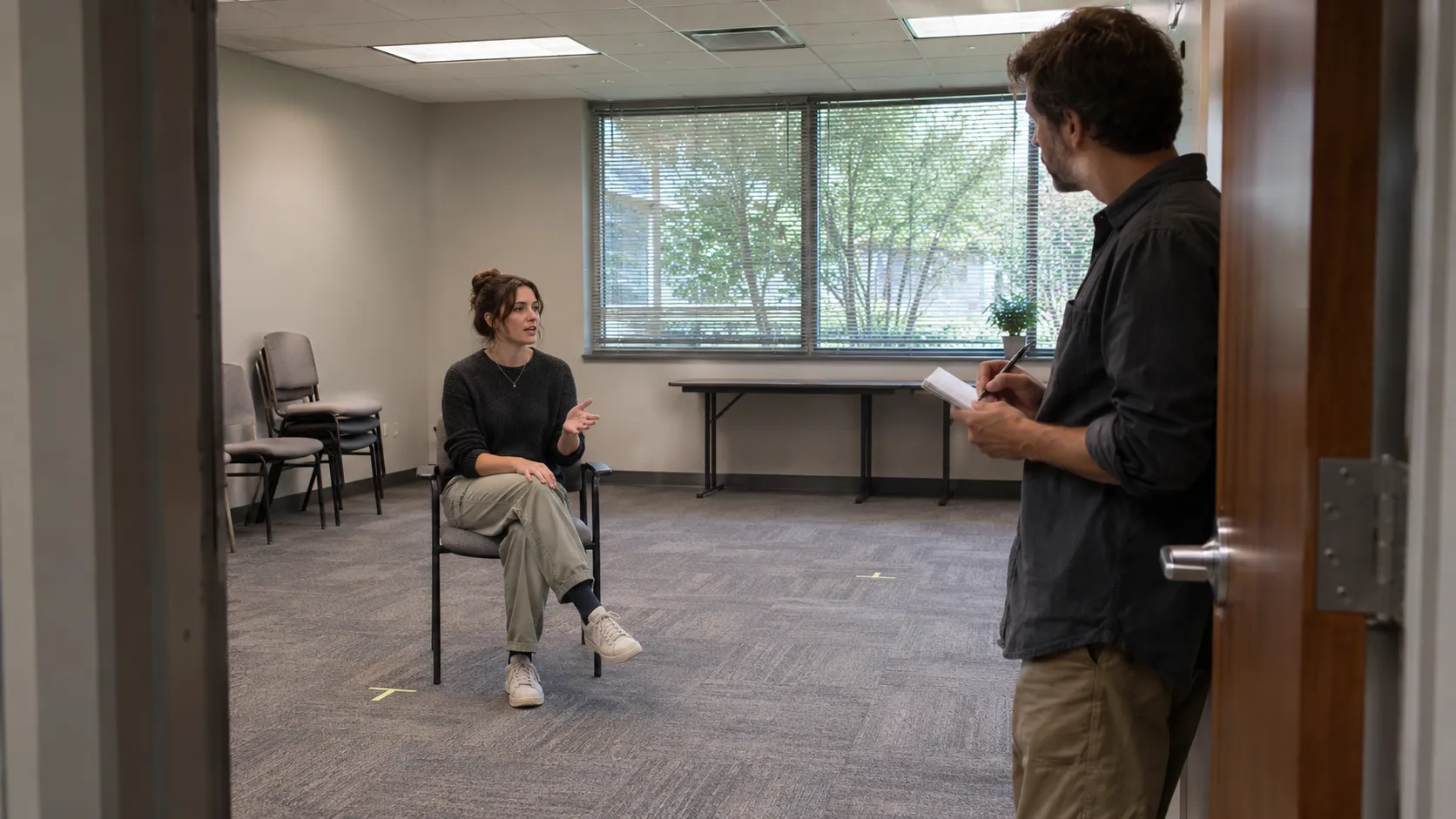
The image is an AI-generated illustration of a fictional production scenario.