
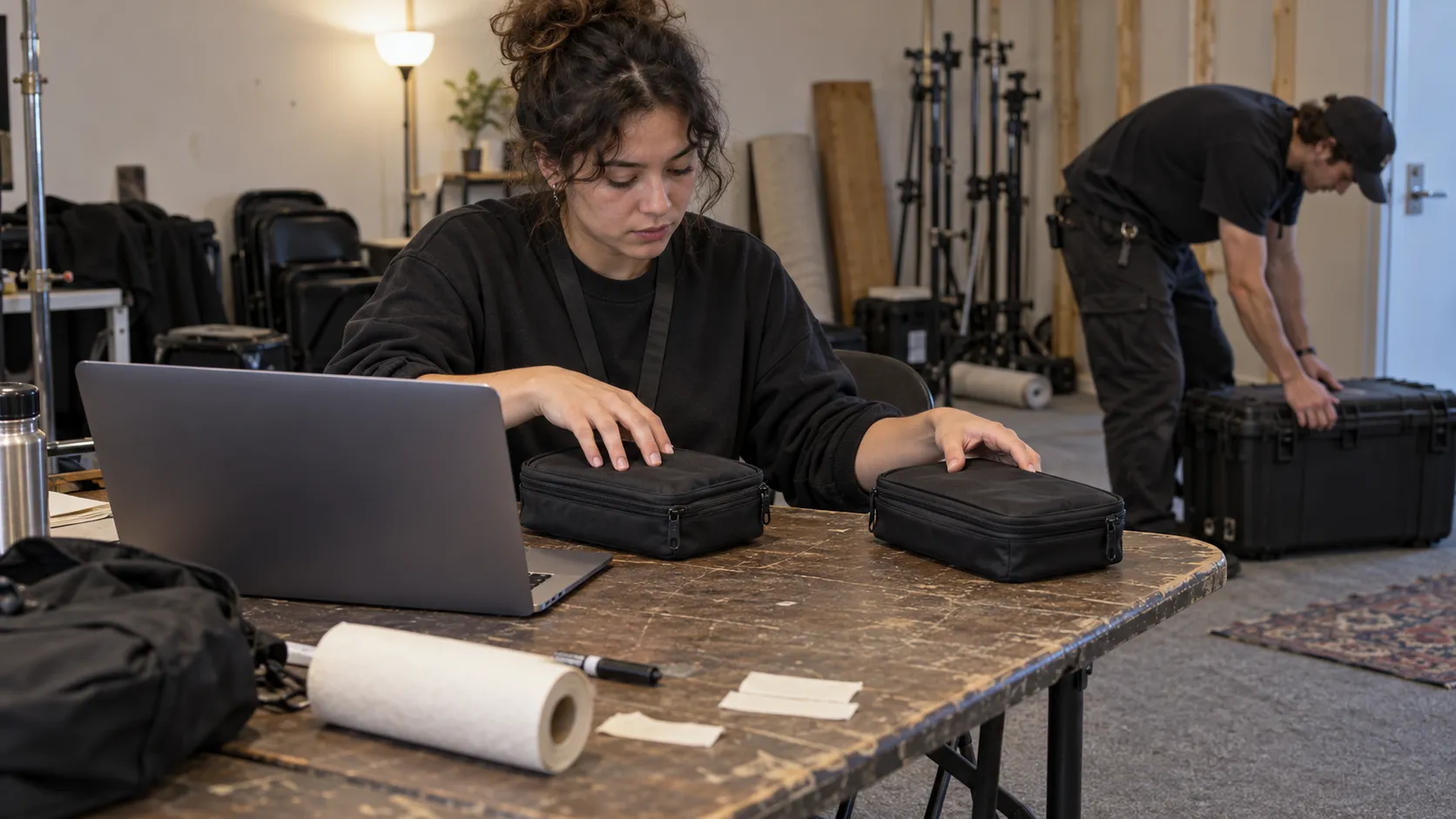
The camera can stop recording before the media work is finished. One card is still being copied, another has been handed to the producer, and the person packing the rental cases is asking which cards can go back. A fast card does not answer any of those questions.
The useful rental decision is bigger than capacity or a headline transfer rate. It includes the reader, the actual computer connection, the destination storage and the person who decides the handoff is complete. When those responsibilities are vague, wrap becomes the moment the crew discovers that everyone meant something different by “backed up.”
Know what the camera has actually recorded
Start with the files the production needs, not the number of occupied card slots. Main recordings, proxies and other recorded assets can have different jobs. Decide what must reach post and which source contains it before designing the offload.
The Canon C400 kit provides a relevant rental example. Canon’s media description identifies a CFexpress Type B slot for its main recording options and an SD slot with sub-recording and proxy options. Two media types in the camera should prompt a question about what each holds; they are not, by themselves, evidence of two interchangeable copies of the required originals.
Confirm the selected recording configuration with the camera department. An editor expecting original camera files needs a different handoff from someone receiving lightweight review material. A proxy may be useful for the latter without replacing the former.
Give the media a consistent identity that survives the move from the camera to the offload station. The card identifier, production day and camera identification should make sense to the person receiving the files, not only to the assistant who removed the card.
Specify the transfer chain, not just the reader
A reader that accepts the card is one part of the package. The cable, host connection and destination storage still have to work together in the configuration the production will use.
Our CFexpress card reader listing is a starting point for that conversation. Confirm the actual supplied reader and its compatibility with the card type, computer and cable. A category name is not a complete interface specification, and a listing does not establish availability for your dates.
The cable deserves attention even when both ends fit. Apple’s cable comparison distinguishes its Thunderbolt 3 cable from its USB-C Charge Cable, which supports data transfer at USB 2.0 speeds. Connector shape alone does not tell the crew what performance to expect.
Before production, run the intended copy-and-verification process with representative test footage through the actual chain. Observe the result rather than calculating a wrap promise from the largest number on a card label. If the workflow changes at the last minute, treat that change as something to check, not an equivalent substitution by appearance.
Separate copying, verification and review
“Files are on the drive” is a location statement. It does not say how the copy was checked, whether all required material was included or whether the receiving department can use it.
OWC’s Copy and Verify documentation describes checksum-verified copying and a Media Hash List containing file information and hash values. That illustrates an important distinction: a verification record gives the production evidence about a transfer, beyond a folder appearing at the destination.
Use the production’s agreed verification method and retain its results with a clear connection to the source media. Resolve reported errors instead of treating a finished progress bar as acceptance. An unsuccessful verification needs a named person and an escalation path while the source is still available.
Playback review serves another purpose. Opening representative copied clips in the intended software can reveal an unexpected format or a handoff problem. It does not replace checking the full transfer, and a successful checksum does not establish that the camera captured the intended picture and sound. Plan those checks as complementary tasks.
Leave room for the final card
A workflow can look comfortable during a quiet part of the shoot and still have unfinished work after the final take. Ask what remains when recording stops: the last copy, the agreed verification, any required additional destination and the handoff record.
Keep the relevant reader, cables, storage and power accessible until that work is complete. Packing the connection the media wrangler still needs creates a problem that extra card capacity cannot solve.
Agree what happens if the final transfer takes longer than the production expected. Who stays with it? Who keeps custody of the source? Who can approve a change to the handoff arrangement? Discuss equipment-return implications with the Rental Team in advance rather than assuming the production’s data schedule changes the confirmed rental terms.
This is not an argument for a universal offload duration. It is an argument for giving the last card the same deliberate ownership as the first.
Make release a decision someone owns
A useful handoff note might say: “Camera A’s final card remains with the media lead. The required original files are copied to the agreed separate destinations; verification reports travel with the delivery. Post confirms the requested material and folder arrangement. The named production lead authorizes source-media release after the agreed checks.” This is a hypothetical responsibility note, not a verified backup or a universal retention policy.
Adapt that note to the production’s requirements, including who may authorize erasure or reuse. Keep unresolved media visibly separate from media that has been released. Do not let a case being packed become the decision to clear its contents.
Bring the complete media path into the rental request: recording format, required card types and quantities, reader, host connection and the equipment you are bringing. The important outcome is not merely getting footage off a card quickly. It is knowing what was delivered, how it was checked and who accepted responsibility for what happens next.
The image is an AI-generated illustration of a fictional production scenario.